
Science
Research leads to ground-breaking treatments which improve the care and quality of life for people living with skin conditions.
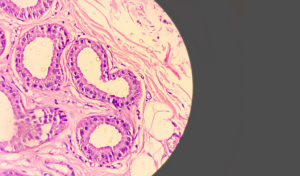
Making Progress in Hidradenitis Suppurativa Patient Care
Nearly three million Americans suffer from hidradenitis suppurativa (HS), an incredibly painful relapsing inflammatory skin disease characterized by debilitating boils and abscesses that can progress to dermal tunnels and scarring. “This is not a rare disease,” said Haley Naik, MD, MHSc, and professor in the Department of Dermatology, UCSF School of Medicine. “Yet, since its first report in the early 19th century, it has been under-recognized…

Fleeing War and Finding Her Purpose
Natasha Mesinkovska, MD, PhD, is passionate about helping her patients grow hair and keep the hair they have. She is a bench scientist and clinical trialist whose relentless pursuit of better treatments for alopecia areata (AA) is central to her work caring for her patients. Mesinkovska is an associate professor and vice chair for clinical…

On the Art and Science of Skin Immunity
As a child, Tiffany Scharschmidt, MD, found an outlet for her creativity through Chinese brush painting. Her fourth-grade teacher, seeing her aptitude and passion, encouraged her to join an adult evening class. She painted throughout her childhood but, as a mother of three and a busy clinician-scientist, Scharschmidt no longer has much time for it. “These days, I use the creative part of my brain conceptually for my research,” she said. “I don’t see research as algorithmic. It’s more like sitting with the unknown and being…

Organoids, CRISPR, and a Shortcut to Therapies for Rare Blistering Diseases
Blistering skin diseases cause a great deal of ongoing suffering. Their characteristic surface wounds cause pain, itching, and infections, and conventional treatments, including topical and oral corticosteroids, provide temporary, limited relief. For autoimmune blistering diseases, like pemphigus vulgaris, monoclonal antibodies (e.g., rituximab) promise longer-lasting relief, while CAAR-T cell therapy that targets B cell-mediated autoimmune diseases is a promising development…

Transforming Diagnosis and Care of Patients with Pyoderma Gangrenosum
When Alex Ortega, MD, was in medical school at the Universidad Nacional Mayor de San Marcos, in Lima, Peru, he became fascinated with dermatology. He had come across a paper about pemphigus foliaceus in Brazil (Warren et al. 2000), the lead author of which was a fellow Peruvian, Luis Diaz, who at the time was…
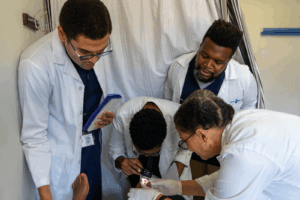
Breaking New Ground and Breaking Divides in South African Dermatology for Black Africans
As a Black South African living under apartheid, Ncoza Dlova, MD, faced racism at every turn. Yet she broke through systemic barriers to achieve a series of historic firsts. Dlova was the first Black African woman and dermatologist to graduate from the School of Clinical Medicine at the University of KwaZulu-Natal (UKZN) in Durban, South…

Melanonychia and the Study of Nail Diseases
For 35 years, Judith Domínguez-Cherit, MD, has worked as a dermatologist and assistant professor of dermatology at the Dr. Manuel Gea González General Hospital, the same practice her father, the distinguished dermatologist Luciano Domínguez-Soto, started in 1977. “When I was young, my father took me with him to the hospital,” she said. “I became interested…

Vitamin D and Synthetic Melanin in Wound Healing
Twenty-two years ago, Kurt Lu, MD, was a postdoctoral fellow in molecular and cellular dermatology at Case Western Reserve University in Cleveland. He was studying macrophages with Kevin Cooper, MD and wanted to know more about the role these cells play in the resolution of inflammation in the skin. “Macrophages are in every organ system,…

Creating Disease Severity and Quality-of-Life Scoring Systems for Blistering Diseases
Comparing the efficacy of existing therapies between clinical trials, as well as evaluating new treatments, requires an accurate and reliable assessment of the clinical nature of a disease. Yet the first comprehensive analysis of the interventions used to treat pemphigus, a range of autoimmune blistering diseases (AIBD), was inconclusive due to incomplete information, including absence…

Where Scientific Innovation, Discovery and Clinical Dermatology Converge
Michael Rosenblum, MD, PhD, was a 20-year-old undergraduate at the University of British Columbia when his mother became ill with breast cancer. At the time, physician-scientists were just beginning to explore how the immune system could be directed to target cancer cells. At the forefront was Dr. Steven Rosenberg, who had written a book that…