
Dr. Andrew Ji Receives the 2026 DF J&J Early Career Innovator Award
Funding supports research in the mechanisms that sustain inflammation and treatment resistance in atopic dermatitis.
October 2026
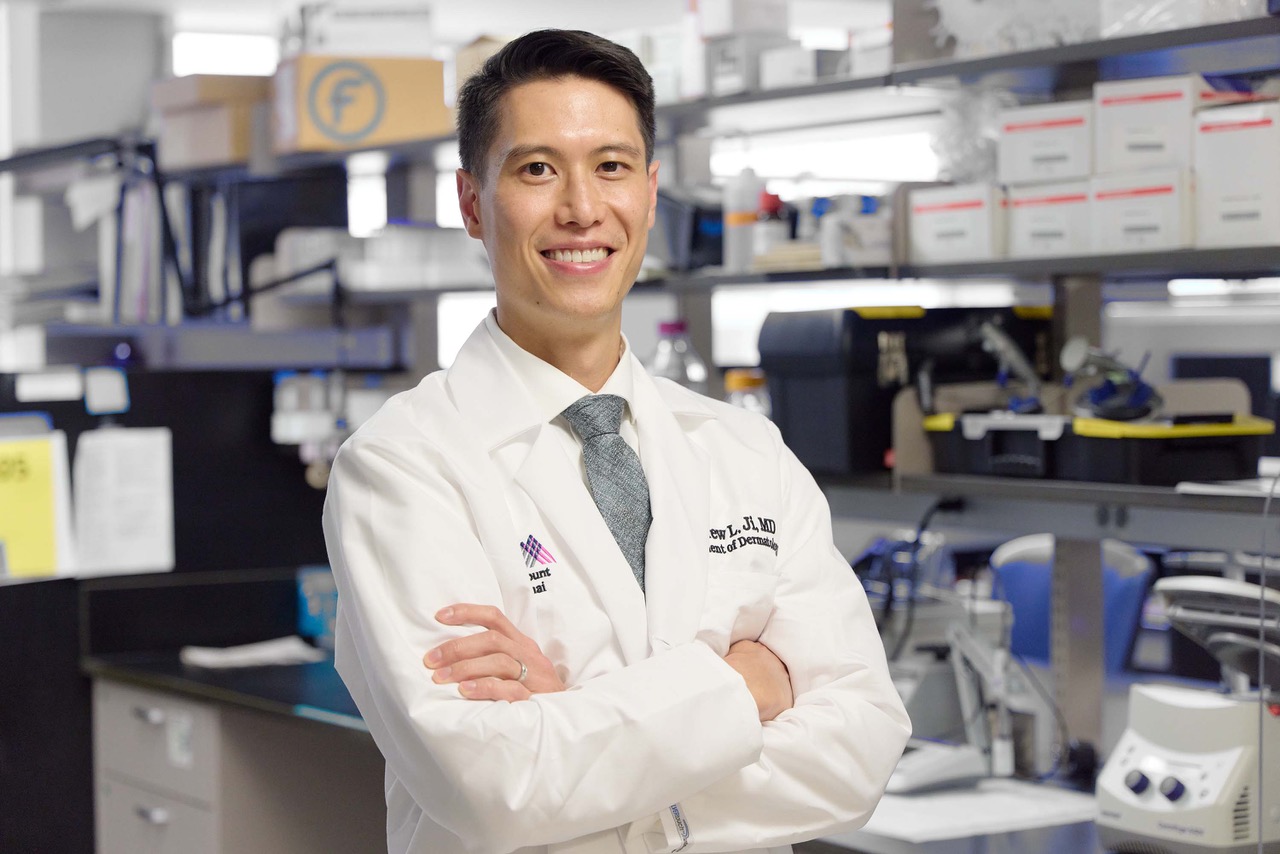

The tissue of an AD lesion contains a mixture of stromal cells, as well as immune cells recruited to the site by cellular signals, which behave differently from each other. Ji combines his clinical practice with experiments to help understand the cellular communication between disease-associated subpopulations of cells that contributes to pathogenesis and treatment resistance. The ultimate goal is to find therapeutic targets to prevent disease flares and promote lasting remissions in AD.
As a medical student at Weill Cornell Medical College in New York, Ji joined a cancer biology lab that focused on melanoma and assumed he would become an oncologist. But his research on skin tumors led his colleagues to suggest he consider dermatology. He shadowed an attending physician, Dr. Joseph Jorizzo, at a Saturday clinic and fell in love with the field.
“As a dermatologist, I treat not only cancer, but infectious diseases, chronic inflammatory diseases, and wound healing. I find it very gratifying.”
“Dermatology was a perfect fit for me because it encompassed many different disciplines,” said Ji. “As a dermatologist, I treat not only cancer, but infectious diseases, chronic inflammatory diseases, and wound healing. I find it very gratifying.”
Ji arrived in the field at a propitious moment, when the study of skin biology, an understanding of the underlying cellular mechanisms of disease, investigative technologies that allow single-cell analysis, and the advent of biologics combined to usher in an era of clinical success for previously difficult-to-treat conditions. The technology to analyze normal and inflammatory skin cells has progressed incredibly since he was a medical student in 2012. He is now able to tease out differences at the cellular level between distinct populations of cells, leveraging single-cell RNA sequencing (scRNA-seq), spatial transcriptomics, ATAC-sequencing (ATAC-seq), and multi-omics approaches to study the pathogenesis of inflammatory skin diseases (Houser et al. 2023; Thrane et al. 2023).
Investigating the memory of inflammatory stress
Ji dissects the ways immune cells infiltrate skin during chronic inflammation to mold the tissue. While the resident cells, keratinocytes, fibroblasts, and blood vessels, are static in the structural makeup of the tissue, they are dynamic in the ways they upregulate various gene expression programs that influence immune cell recruitment and the behavior of immune cells.
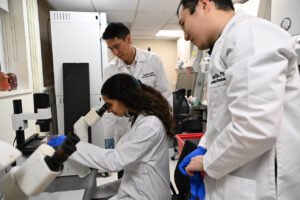
Dr. Ji (back) with PhD student Raman Gill (left) and postdoctoral student Inchul Cho (right).
“There’s dynamic crosstalk between tissue-infiltrating cells and tissue-resident cells that is key to sustaining inflammation,” he said. “We use single-cell techniques to tease apart which immune cells seem to be the most active, most cytokine-secreting, and figure out how they influence different populations of tissue-resident cells in the skin.”
“There’s dynamic crosstalk between tissue-infiltrating cells and tissue-resident cells that is key to sustaining inflammation.”
In particular, his lab analyzes the cellular differences between normal and pro-inflammatory fibroblasts. By upregulating “pro-inflammatory” genes, which turn on the expression of cytokines, chemokines, and extracellular matrix factors, fibroblasts create an inflammatory environment. Cytokines and chemokines attract immune cells while extracellular matrix factors remodel connective tissue to make it easier for immune cells to migrate from blood vessels into skin. For example, regulatory T cells (Tregs) are recruited to repair the epidermis where they communicate with fibroblasts. Tregs regulate infection-fighting effector T cells, but this control can be overwhelmed when effector cells mistakenly attack self-antigens, resulting in chronic inflammation.
“If we can block this activity, either by preventing fibroblasts from becoming pro-inflammatory or from expressing pro-inflammatory genes, we may be able to tone down inflammation,” Ji said. This is a new way of thinking about inflammation since the focus of treatments has been on general immunosuppression. While this approach has been successful, it can lead to unwanted side effects, like increased susceptibility to infection. And no current therapy for AD sustains remission. “By targeting non-immune mechanisms, we think there may be a way to achieve more durable responses.”
Open chromatin profiling, epigenetics, and erasing cellular memory
Chronic inflammatory diseases tend to relapse at the same site of a patient’s body after treatment. A prior exposure to an inflammatory environment, whether mediated by cytokines or metabolic factors, is believed to encode a durable memory within the cells that are exposed to that stimulus. Upon a new exposure they respond more quickly.
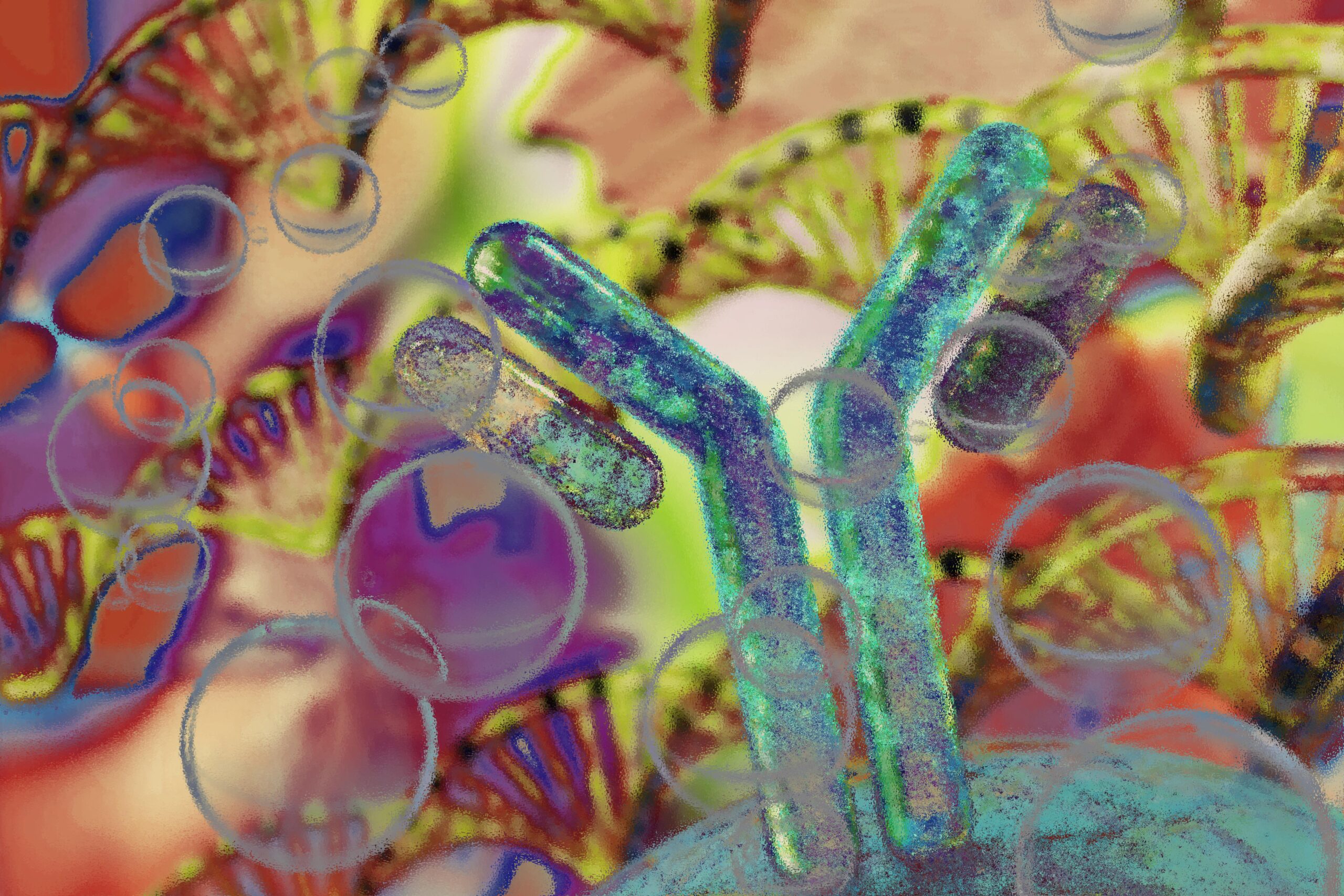
One way this can occur is through dynamic remodeling of chromatin, which affects gene expression by altering the accessibility of particular DNA sequences. This is regulated at the epigenetic level when chromatin is altered via histone modifications, such as methylation, acetylation, and lactylation. Dynamic chromatin changes can persist in cells even after resolution of inflammation (Naik et al. 2017), including in hematopoietic stem cells (Zeng et al. 2026). When there’s another stimulus, the chromatin is already open and accessible for transcription factors to initiate gene expression, a form of cellular memory.
The central premise of the proposal for which Ji received this award is that preventing inflammatory memory or easing memory signals, thereby restoring fibroblasts to a pre-inflammatory state, may be the secret to achieving longer lasting remissions. He intends to target epigenetic changes as a way to modulate the dynamic regulation of gene expression in specific cell types, whether it’s fibroblasts or T cells.
“Preventing that memory or erasing it might be a way to prevent relapses,” said Ji. “Opening and closing sections of chromatin to allow gene expression depends on epigenetic regulators, likely transcription factors and histone-modifying enzymes.”
“There’s dynamic crosstalk between tissue-infiltrating cells and tissue-resident cells that is key to sustaining inflammation.”
Comparing gene expression profiles between normal and pro-inflammatory fibroblasts can reveal pathways that are altered in the pro-inflammatory state. The genes or the proteins encoded by the genes in dysregulated pathways offer potential therapeutic targets.
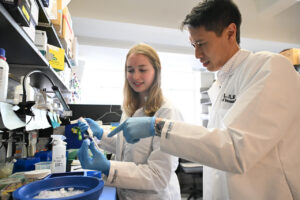
Alexis Wilder (left) is a research technician who is now studying medicine.
One case is the expression of chemokines, such as CXCL1, which is increased in pro-inflammatory fibroblasts and may act to recruit T cells, macrophages, and other components of the immune system (Imanishi et al. 2025). A CXCL1 blocker might decrease this immune recruitment.
The challenge is that fibroblasts can upregulate dozens of chemokines, suggesting functional redundancy and that blocking a single chemokine may be insufficient.
“Oftentimes these are coordinated gene expression programs, with one transcription factor species binding multiple places in the genome,” said Ji. “If we can discover what is controlling gene expression programs in fibroblasts, then block specific transcription factors, this could lead to global suppression of pro-inflammatory activity.”
Transcription factors have specific DNA sequence motifs to which they bind. ATAC-seq is a high-throughput sequencing technique used to identify areas in chromatin that are open and accessible for transcription factors to bind and turn on gene expression. ATAC-seq data is verified with other assays, such as chromatin immunoprecipitation sequencing (ChIP-Seq), CUT&RUN, and CUT&Tag, to show that a transcription factor is indeed bound to those regions. These high-throughput techniques point to factors that might be important. Using some of these techniques, Ji is able to overlap changes in gene expression with open chromatin motif analyses to identify a set of candidates for therapeutic targeting.
“Histone demethylase and acetylase inhibitors can only broadly block the ability of enzymes to alter the histone profile. Perhaps the next generation of molecules will have the ability to localize these enzymes to specific places where they will disrupt the activity.”
“There are already pharmacologic inhibitors of chromatin regulators, but they lack specificity,” he said. “Histone demethylase and acetylase inhibitors can only broadly block the ability of enzymes to alter the histone profile. Perhaps the next generation of molecules will have the ability to localize these enzymes to specific places where they will disrupt the activity.
“There is evidence that disruption of the immune system can lead to a susceptibility to inflammation and, in some cases, spontaneous inflammation later in life,” Ji said. “But the tissue resident cells have been overlooked in this paradigm. If we disrupt fibroblasts, the immune system becomes dysregulated. It turns out this is a complex, two-way communication, with other factors controlling the balance.”
The future of basic and translational research
in AD
The Dermatology Foundation Research Awards Program supports researchers making the leap to independent funding, which can be one of the hardest transitions for early-career researchers.
“The pool of funding for early investigators is shrinking, and this award comes at a critical time,” said Ji. “It gives us a chance to continue generating data and publishing, so we become established enough to compete for independent funding.”
Ji thinks this type of research on the pathophysiology of AD will lead to breakthroughs in treatment options. He points to ways researchers are targeting multiple pathways at once, using bispecific and trispecific antibodies to target multiple cytokines and pathways simultaneously.
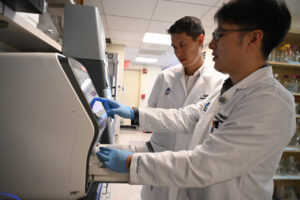
Postdoctoral student Ichiro Imanishi (right) with Dr. Ji.
There are trials in the pipeline to target multiple cytokines because a good portion of AD patients do not respond, or have transient responses, to dupilumab, one of the biologics that has shown success. Combining additional biologics to treatment, such as IL-4 and IL-31 inhibitors, might achieve greater overall responses.
“That still doesn’t solve the memory problem,” he said. “That’s where epigenetic modulation or inhibition, which can precisely regulate gene activity become very interesting to us. This will, of course, require figuring out the therapeutic window to minimize adverse events. And it means more exploration, deeper profiling, and piecing together multiple layers of information to construct a unifying model of what’s happening. That’s the kind thing that gets me excited and is only possible with this type of research funding.”
Invest in discovery. Donate to the Dermatology Foundation today!
References
Houser AE, Kazmi A, Nair AK, Ji AL. The Use of Single-Cell RNA-Sequencing and Spatial Transcriptomics in Understanding the Pathogenesis and Treatment of Skin Diseases. JID Innov. 2023;3(4):100198.
Imanishi I, Gill R, Wilder A, et al. A basophil-fibroblast pro-inflammatory axis fuels type 2 skin inflammation. Cell Rep. 2025;44(8):116114.
Naik S, Larsen SB, Gomez NC, Alaverdyan K, et al. Inflammatory memory sensitizes skin epithelial stem cells to tissue damage. Nature. 2017;550(7677):475–480.
Thrane K, Winge MCG, Wang H, et al. Single-Cell and Spatial Transcriptomic Analysis of Human Skin Delineates Intercellular Communication and Pathogenic Cells. J Invest Dermatol. 2023;143(11):2177–2192.e13.
Zeng AGX, Nagree MS, Jakobsen NA, et al. Human haematopoietic stem cells remember inflammatory stress. Nature. 2026;655(8122):458–467.