
From the Lab to the Launchpad
Eugene Bauer, MD, recipient of the 2025 DF Discovery Award
December 2025


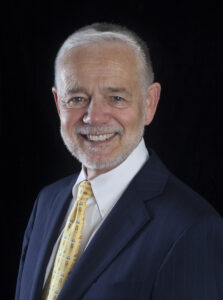
Dr. Bauer made a breakthrough discovery in 1988 whose impact continues to drive EB research today.
Dr. Eugene Bauer, “Gene” to almost everyone who knows him, made a breakthrough discovery in 1988 whose impact continues to drive research into epidermolysis bullosa (EB) today. It’s why he received the DF’s 2025 Discovery Honorary Award, and why he is held in high esteem in the worlds of academia and industry.
Medical school before research
Stanford University is a global leader in the field of EB research and care in large part because of Bauer. When he became chair of the department of dermatology, and later dean of the school of medicine, he established the first EB clinic in the US, drawing patients from around the world. He recruited a team of dermatologist-researchers, including David Woodley, MD, Paul Khavari, MD, PhD, Al Lane, MD, and Peter Marinkovich, MD, to develop and test molecular therapies for EB.
Bauer was drawn to dermatology during his senior year of medical school at Northwestern University (Northwestern), where he met Ruth Freinkel, the first full-time dermatologist at Northwestern’s School of Medicine. “Ruth played a big role in getting me started,” he said.
That same year, he considered dropping out of medical school to pursue a PhD, until a professor he barely knew heard about his plan, called him into his office and said ‘I hear you’re thinking about dropping out to get a PhD. That’s the dumbest thing I’ve ever heard of.’ “He told me to finish medical school first, and he was absolutely right,” said Bauer.
It started with tadpoles
Bauer completed his medical degree and was midway through his medical internship at Barnes Hospital in St. Louis at Washington University (Wash U) when he realized he missed laboratory research. After consulting with his spouse, he decided to take a fellowship to study tadpole metamorphosis in the Art Eisen Laboratory at Wash U.
“Tadpole metamorphosis is important,” said Bauer, “because when the tadpoles undergo their metamorphosis to frogs, they have to resorb the connective tissue around their gills to create lungs. The enzyme that mediates it is vertebrate collagenase, known today as matrix metalloproteinase-1 (MMP-1).
“Compared with normal skin, samples from EB patients produced two to ten times more collagenase — something fundamental was happening beneath the surface.”
“When you add a little bit of thyroid hormone to an amphibian environment in water that the tadpoles are growing in, they’ll undergo metamorphosis, and then all of a sudden, they start to resorb their tails and sprout legs. In a short-term culture the skin of their tails show enormous increases in amounts of collagenase.”
Similarly with human skin, a small punch biopsy placed in tissue culture can survive for a week or more, long enough to reveal striking differences. Compared with normal skin, samples from EB patients produced two to ten times more of the collagenase, an indication that something fundamental was happening beneath the surface. “We worked on tadpoles for a couple of years, and then Eisen took me around to see a patient of his that had EB, and I got very interested in it,” said Bauer.
His fellowship turned into a four-year residency program, two of which were spent in dermatology.
“The combination of being guided by Ruth Freinkel from Northwestern and then sort of backing into it through the Eisen lab — that’s how I got into dermatology,” he said.
Decoding disease from the bench
Much of Bauer’s early research stemmed from patient problems brought into the lab. “If you look at my first fifty or seventy-five publications,” he said, “they all grew out of insights we tried to develop from what we were seeing in patients, and to explain them biochemically or immunologically.”
“We worked on tadpoles for a couple of years, and then Eisen took me around to see a patient with EB, and I got very interested in it.”
Bauer and his team used basic science to understand connective-tissue remodeling. They purified MMP-1, an enzyme critical to the remodeling of connective tissue, grew human skin fibroblasts, collected the culture medium, concentrated it and then purified the enzyme through a series of biochemical steps. “We knew we had several diseases in the skin that might somehow be related to either an increase or a decrease, or a malfunction of MMP-1. And so we looked at using very basic techniques of immunochemistry.”
In another investigation, they found increased collagenase was part of an exaggerated wound response in dystrophic EB patients whose Type-VII collagen was genetically defective and produced fragile and blistered skin.
They found that part of the tumor’s ability to expand and destroy tissue came from a specific cytokine that once released triggered nearby fibroblasts to make collagenase and remodel the tissue as the cancer grew. “It was that kind of thing that really drove me early on,” he said. “Because I could see there was the possibility of understanding, from a very basic approach, connective tissue turnover, basal cell cancers, scleroderma, and a variety of connective tissue nevi, these so-called congenital connective tissue nevi.”
Each experiment reinforced his central belief: that the key to understanding skin disease lay in bridging the gap between the patient’s bedside and the biochemical bench.
50 yards to a new idea

From building Stanford’s first EB clinic to helping launch transformative biotech companies, Dr. Eugene Bauer’s work has changed how science moves from bench to bedside and beyond.
“I was in an environment where with Art Eisen and other clinicians, I could spend as much time as I wanted or needed building my laboratory work and also becoming a much more mature physician-scientist,” said Bauer.
When he left Wash U for Stanford, he took his NIH grants with him and quickly set about building something bigger. With a handful of colleagues he’d recruited, he secured a major program project grant focused on EB — a multidisciplinary effort that brought together dermatology, pathology, and several other departments. It was a setup that fostered the kind of interdisciplinary collaborations Bauer thrived on.
“At Stanford, you could walk fifty yards and find a new idea,” he said. Stanford’s Department of Biomedical Engineering was the first and only interschool department in the university’s history. Working with the university president, a former dean of engineering, Bauer helped negotiate a rare collaboration that joined the school of medicine and the school of engineering under a shared administrative structure.
As his lab flourished and his research broadened, administrative responsibilities began to follow. Bauer joined hospital committees, collaborated with the children’s hospital, and was eventually invited to serve on the search committee for a new dean of Stanford’s School of Medicine. “I thought I was just helping,” he said. Ultimately, the search committee offered Bauer the position and he accepted.
By the time he stepped down from his leadership roles in 2001, as both dean of the medical school and vice president for medical affairs, Bauer oversaw two hospitals, the faculty practice, and a vast academic enterprise that accounted for approximately half of the university’s total budget.
A second act in biotech
Fourteen years after stepping down from his leadership roles at Stanford, Bauer found himself at the start of a very different chapter, one that would pull him deeply into the emerging world of biotechnology. After a brief sabbatical, Bauer began consulting in Southern California and soon joined the board of an Israeli biotechnology company, Medgenics, whose innovative approach captivated him: using a patient’s own skin tissue genetically engineered to produce therapeutic proteins such as erythropoietin offered a potential alternative to repeated injections for patients with end-stage renal disease. “It was an elegant idea,” he recalls. “Take a small skin biopsy, insert the gene, culture it, and then reimplant it so the patient’s own tissue makes the drug.”
“From the beginning, I’ve always been drawn to the places where science meets medicine.”
Medgenics opened the door to a series of ventures rooted in the same translational impulse that had long driven his academic work. Backed by venture capital, Bauer helped launch a series of biotech startups focused on dermatologic innovation. One of the earliest, Neosil, developed a topical antimicrobial and hair growth treatments and was eventually acquired by Peplin where Bauer became president and chief medical officer until its acquisition by Leo Pharma. More opportunities followed. At Kadmon Holdings, where he was one of the original board members, he contributed to the development of a breakthrough therapy to prevent organ rejection, work that eventually led to the company’s acquisition by Sanofi.
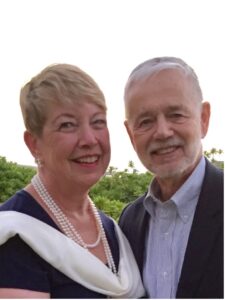
Bauer and his wife Gloria, “Gogo” operate as a team. He said they “make decisions together, and we celebrate together, and when necessary, we commiserate.” This photo was taken when they created the Freinkel Professorship at Northwestern University in 2010.
He then went on to co-found Dermira with Tom Wiggins, former CEO of Connetics, in 2010. Over the next decade, Dermira built a strong dermatology portfolio before being acquired by Eli Lilly in 2020. One week after the deal closed, Bauer helped founder Luis Peña launch yet another company, Evommune Inc., which recently celebrated its fifth anniversary.
Impact from insight
Looking back, Bauer views his career as a continuum rather than a series of departures. The settings changed, from the lab bench to the dean’s office to the boardrooms of biotech startups, but his motivation never did. It traces directly back to the moment he first saw the biochemical underpinnings of EB in a small tissue sample, and to the insight that basic science could reveal a path forward for patients with devastating skin diseases.
“From the beginning, I’ve always been drawn to the places where science meets medicine,” he reflects. That intersection between the enzyme abnormalities he uncovered early in his career, the clinical urgency of conditions like EB, and the translational promise of industry shaped everything that followed. “Moving ideas from discovery to real-world application,” he said, “is where you can make a difference.”
“Moving ideas from discovery to real-world application is where you can make a difference.”
In many ways, the breakthrough he made in 1988 still animates his work today: the belief that understanding disease at its most fundamental level is the catalyst for innovation. It’s the same conviction that drove him in the Eisen lab, guided him through decades of leadership at Stanford, and continues to propel his work in biotechnology.
Learn more about DF Honorary Awards.