
Transforming Diagnosis and Care of Patients with Pyoderma Gangrenosum
From a formative encounter in the Peruvian Amazon to leading-edge research at Oregon Health & Science University, Dr. Alex Ortega is working to bring clarity, compassion, and clinical rigor to the treatment of pyoderma gangrenosum.
March 2026
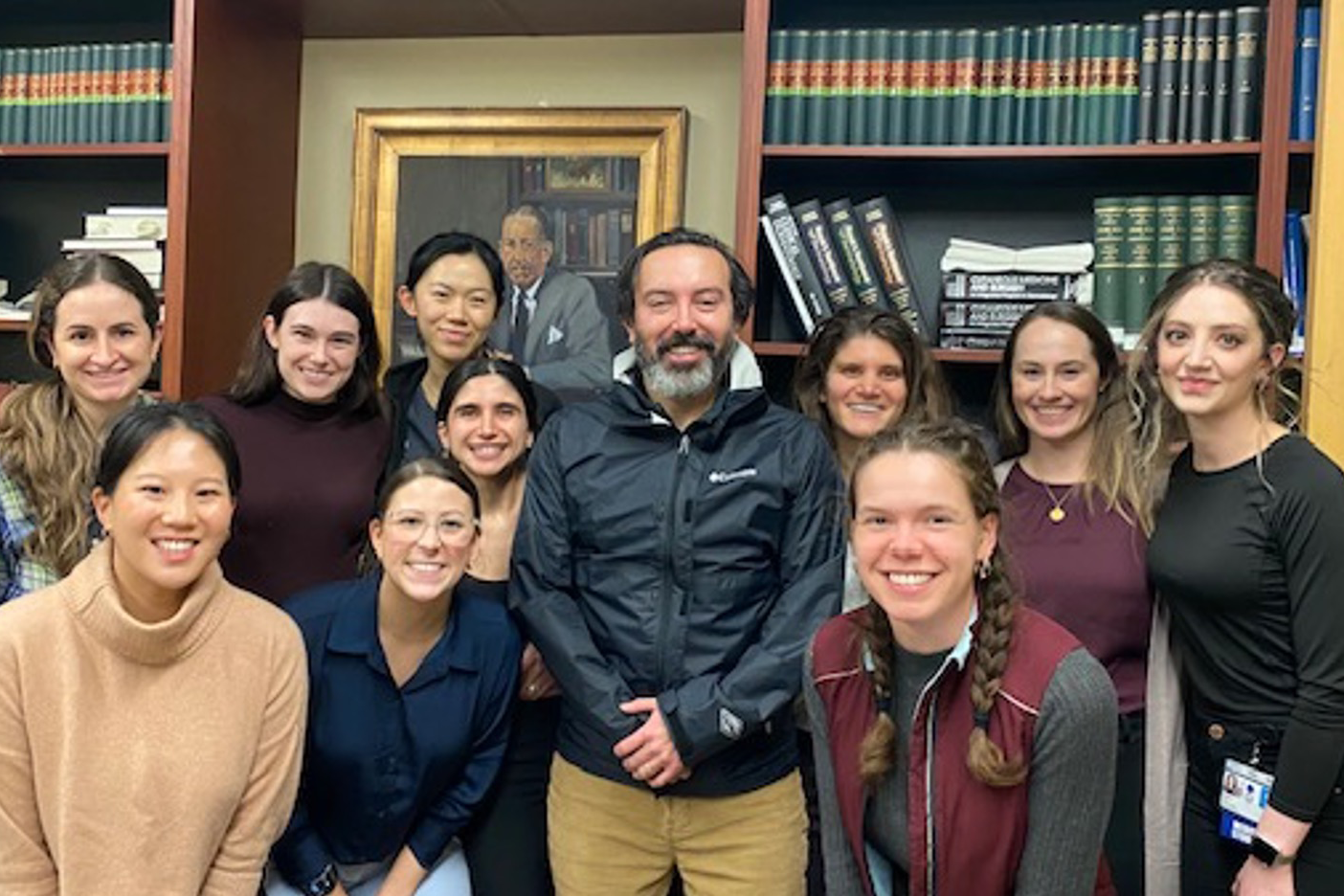

When Alex Ortega, MD, was in medical school at the Universidad Nacional Mayor de San Marcos, in Lima, Peru, he became fascinated with dermatology. He had come across a paper about pemphigus foliaceus in Brazil (Warren et al. 2000), the lead author of which was a fellow Peruvian, Luis Diaz, who at the time was chair of the Department of Dermatology at the University of North Carolina-Chapel Hill (UNC-Chapel Hill).
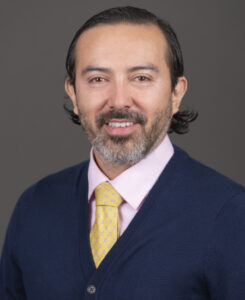
Dr. Alex Ortega is interim chair of the OHSU Department of Dermatology and specializes in inflammatory conditions and ulcerative disorders of the skin. His research focuses on advancing diagnostic tools and treatment for pyoderma gangrenosum.
Ortega decided to pursue research training under Diaz. Ortega was one of the first medical students to travel to communities deep in the Amazonian rainforest of eastern Peru with his Peruvian mentor, Carlos Galarza, to treat patients with neglected diseases.
“One girl in particular affected me,” Ortega said. “She was an ostracized 11-year-old kid, isolated in a little cabin because her community thought she had leprosy.”
They diagnosed pemphigus foliaceus and transported her to a hospital in Pucallpa to treat her with steroids and antibiotics. Her plight inspired Ortega to help others with neglected rare diseases, whose quality of life was affected by a lack of diagnosis and treatment.
“Learning about the connection between these severe skin conditions and a compromised immune system fascinated me,” Ortega said. “Pemphigus was the perfect combination of immunology and dermatology to get me started on my career path.”
Diagnosing pyoderma gangrenosum
Ortega did residencies in internal medicine and dermatology at Virginia Commonwealth University (VCU) in Richmond and is board certified in both disciplines. He joined the faculty of VCU for two years before moving in 2016 to Oregon Health & Science University (OHSU) where he is professor and Interim Chair of Dermatology.
“Pemphigus was the perfect combination of immunology and dermatology to get me started on my career path.”
Ortega specializes in inflammatory conditions and ulcerative disorders of the skin, including hidradenitis suppurativa (HS) and pyoderma gangrenosum (PG). PG is an inflammatory skin condition that results in painful wounds and ulcers, usually on the lower extremities. The prevalence, incidence, and mortality of PG in the absence of treatment are similar to those of blistering disorders.
Yet, unlike pemphigus and other blistering diseases, which benefit from well-established diagnostic, severity and quality-of-life instruments, PG is notoriously difficult to diagnose and classify. To address this gap, international expert consensus has led to the development of validated diagnostic frameworks, including the Delphi-based diagnostic criteria (Maverakis et al. 2018) and the PARACELSUS score (Jockenhöfer et al. 2019), which has helped with the adaptability, comparability, and dissemination in clinical research.
“We’re trying to incorporate these diagnostic frameworks into our clinical trials, but it’s still not like diagnosing pemphigus,” Ortega said. “PG is a heterogeneous disease and usually is advanced by the time it presents in the clinic.”
Creating Disease Severity and Quality-of-Life Scoring Systems for Blistering Diseases
After uncovering major inconsistencies in how pemphigus was measured in clinical trials, Dr. Dedee Murrell led the development of validated disease and quality-of-life scoring systems that transformed research in autoimmune blistering diseases—helping accelerate the path toward more effective, patient-centered treatments.
Primary lesions are pustules or nodules that progress to wound or ulcers. Depending on access to care and the availability of experts in skin conditions, it is usually more than three months after the disease first appears before a patient comes to Ortega’s clinic. They’re likely to have initiated treatment with a non-dermatologist first at primary care, a wound care center, or an emergency room.
“First-line clinicians are likely to see skin ulcers manifesting in different phases,” Ortega said. “These ulcers are of various sizes, sometimes chronic, sometimes red and infected. This interferes with the development of an objective way to diagnose.”
Differential diagnosis not easy
Diagnosis is further complicated because the chronic skin ulcers characteristic of PG are more commonly caused by venous ulcers, calciphylaxis, and factitial disorders. It can also present with autoinflammatory comorbidities, such as HS or severe acne (Maronese et al. 2022). For example, approximately 10 percent of the PG cases Ortega sees also have HS and, if a patient with HS develops ulcerations in the groin or lower abdomen, differential diagnosis can be difficult.
“Biopsies result in nonspecific histopathology and in 10-20 percent of cases can make the skin ulcer worse,” Ortega said. “We take skin biopsies from the edges of an ulcer to rule out conditions that mimic PG, atypical infections, skin cancer, or calciphylaxis, not to rule in PG.”
While clinicians are investigating whether histology of fluid from wound dressings can be used for diagnosis, Ortega is eager for a point-of-care test that allows a diagnosis within ten minutes in the clinic.
“We’re getting ready to train non-dermatologists at OHSU to interpret HFUS scans to identify peripheral features of wounds that can help us differentiate PG from other conditions.”
Imaging devices are proving useful to distinguish the unique features of PG ulcers. OHSU has a skin imaging center with equipment for diagnosing skin conditions, such as confocal microscopes and hand-held optical coherence tomography (OCT) devices, which was co-invented by researchers at OHSU as a non-invasive method for examining the retina. Ortega has also used high-frequency ultrasound (HFUS) to assess the extent, depth, and vascularity of skin lesions (Ross and Ortega 2025; Ross et al. 2025).
“We’re getting ready to train non-dermatologists at OHSU to interpret HFUS scans to identify peripheral features of wounds that can help us differentiate PG from other conditions,” Ortega said. “Combining imaging and clinical criteria should further aid this distinction.”

Dr. Ortega is passionate about PG and conducting research to improve diagnosis and treatment for patients.
Pathophysiology and treatment of PG
As an autoinflammatory disease, the first line of treatment for PG relies on systemic steroids or cyclosporine to shut down the inflammatory response. For patients with severe PG (i.e., with larger or multiple ulcers), clinicians adopt steroid-sparing for maintenance therapy.
Ortega hypothesizes that PG is a complement-driven process in which Th17 cells are activated and lead to NETosis and neutrophil entrapment (Wang et al. 2024; Becker et al. 2025). Other hypotheses for its etiology are that PG is a T-cell-mediated disease (Wang et al. 2018), that inflammatory cells migrate to the skin in response to an antigen (Ronicke et al. 2022), and that activation of the IL-36 pathway plays a role (Sugiura et al. 2024).
“About 50-60 percent of my patients respond to TNF-alpha inhibitors like adalimumab. For the rest, we may need to target a different pathway.”
“Despite the difficulty of integrating all these ideas, they do involve overlapping pathways, which supports the current reliance on biologics, ” Ortega said. “About 50-60 percent of my patients respond to TNF-alpha inhibitors like adalimumab. For the rest, we may need to target a different pathway.”
Adalimumab is approved in Japan to treat PG (Yamamoto et al. 2025). While there are no FDA-approved medications for PG, biologics are used off-label to treat severe cases. In addition to adalimumab, spesolimab, an IL-36 receptor blocker, has been successfully administered off-label for the resolution of severe PG lesions (Guénin et al. 2023).
“Misdiagnosis rates of PG can exceed 20 percent, posing major risks for clinical trials and research in the field.”
Other biologics, such as complement 5a (C5a) inhibitors, show promise as treatments (Himed et al. 2024) even though a recent phase 3 clinical trial of vilobelimab was halted due to futility (InflaRx 2025), which most likely was related to study design rather than efficacy of the medication.
“It’s such a difficult disease to diagnose, yet we need to know we have the right patients enrolled, at the right stage of their disease,” Ortega said. “Misdiagnosis rates of PG can exceed 20 percent, posing major risks for clinical trials and research in the field.”
Since PG is considered a wound, the primary endpoint for the FDA and the EMA has always been complete healing. But chronic comorbidities, such as diabetes, obesity, and venous insufficiency, can make complete healing an inappropriate endpoint for these trials because the drugs used are meant to control inflammation, not provide complete healing. To address this dilemma, Ortega is hoping to find surrogate markers for disease. For example, Ortega has shown that a decrease in pain can be used as a patient-reported measure of treatment response (Erickson et al. 2023).
“If we can identify one or multiple surrogate markers, we can shorten the duration of a trial by months.”
Ortega is one of the co-founders of an international group formed to overcome the lack of standardized tools to measure outcomes in PG. The goal of UPGRADE (Understanding Pyoderma Gangrenosum Review and Analysis of Disease Effects) is to standardize the measurement of disease activity, the effects on quality of life, and response to treatment. By defining what needs to be measured for clinical trials, as well as the eligibility criteria, they expect to create a widely acceptable core outcome set for PG, while also working on the standardization of a data set of eligible patients in an international registry.
“If we can identify one or multiple surrogate markers, we can shorten the duration of a trial by months,” he said. “Stakeholders will then be more willing to invest in trials if these are the primary endpoints.”
Creating a non-profit for education
As a clinician, Ortega is known for his compassion, offering emotional and psychological support to a population suffering from this debilitating disease that severely impacts quality of life.
“I’m engaged with every patient who comes to me. Healing can take a long time, sometimes two years or more, and I need to build a relationship with my patients. I feel blessed that this is my true calling.”
He is the founder and medical director of All Things PG, a non-profit community open to patients and doctors around the country, aimed at increasing awareness, education, and to encourage seed funds from industry for more research.
“I’m engaged with every patient who comes to me,” Ortega said. “Every encounter I have with a hopeless patient is not random. Healing can take a long time, sometimes two years or more, and I need to build a relationship with my patients. I feel blessed that this is my true calling.”
References
Becker SL, Vague M, Shinde A, et al. Role of T Helper 2 Signaling in the Regulation of Neutrophil Extracellular Trap Formation in Pyoderma Gangrenosum. J Invest Dermatol. 2025:S0022-202X(25)02395-4.
Erickson KM, Kody S, Ortega-Loayza AG. Pain as a Patient-Reported Outcome Measure in Pyoderma Gangrenosum. JAMA Dermatol. 2023;159(11):1274–1275.
Guénin SH, Khattri S, Lebwohl MG. Spesolimab use in treatment of pyoderma gangrenosum. JAAD Case Rep. 2023;34:18–22.
Himed S, Tawfik H, Kaffenberger BH. Treatment of Pyoderma Gangrenosum With Vilobelimab. JAMA Dermatol. 2024;160(8):898–899.
InflaRx Announces Outcome of Interim Analysis for Vilobelimab Phase 3 Trial in Pyoderma Gangrenosum. News release. InflaRx. May 28, 2025. Accessed October 14, 2025. https://www.inflarx.de/Home/Investors/Press-Releases/Press-Release~2025-05-InflaRx-Announces-Outcome-of-Interim-Analysis-for-Vilobelimab-Phase-3-Trial-in-Pyoderma-Gangrenosum~.html
Jockenhöfer F, Wollina U, Salva KA, et al. The PARACELSUS score: a novel diagnostic tool for pyoderma gangrenosum. Br J Dermatol. 2019;180(3):615–620.
Maronese CA, Pimentel MA, Li MM, et al. Pyoderma Gangrenosum: An Updated Literature Review on Established and Emerging Pharmacological Treatments. Am J Clin Dermatol. 2022;23(5):615–634.
Maverakis E, Ma C, Shinkai K, et al. Diagnostic Criteria of Ulcerative Pyoderma Gangrenosum: A Delphi Consensus of International Experts. JAMA Dermatol. 2018;154(4):461–466.
Ronicke M, Baur A, Kirr M, et al. Epidermotropism of inflammatory cells differentiates pyoderma gangrenosum from venous leg ulcers. J Dtsch Dermatol Ges. 2022;20(5):619–627.
Ross KR, Ortega-Loayza AG. Revolutionizing Pyoderma Gangrenosum Management: High-Frequency Ultrasound as the Bridge Between Clinical Intuition and Objective Monitoring. Int J Dermatol. 2025 Nov 20. doi:10.1111/ijd.70168.
Ross KR, Thacker S, Hudson M, et al. High frequency ultrasound for pyoderma gangrenosum: A case series. JAAD Case Rep. 2025;63:4–7.
Sugiura K, Fujita H, Komine M, et al. The role of interleukin-36 in health and disease states. J Eur Acad Dermatol Venereol. 2024;38(10):1910–1925.
Wang EA, Steel A, Luxardi G, et al. Classic Ulcerative Pyoderma Gangrenosum Is a T Cell-Mediated Disease Targeting Follicular Adnexal Structures: A Hypothesis Based on Molecular and Clinicopathologic Studies. Front Immunol. 2018;8:1980.
Wang Z, Hornick N, Vague M, et al. NETosis Is Induced by Complement Component 5a: Implications in the Pathogenesis of Pyoderma Gangrenosum. J Invest Dermatol. 2024;144(1):184–188.
Warren SJ, Lin MS, Giudice GJ, et al. The prevalence of antibodies against desmoglein 1 in endemic pemphigus foliaceus in Brazil. Cooperative Group on Fogo Selvagem Research. N Engl J Med. 2000;343(1):23–30.
Yamamoto T, Yamanaka K, Yamasaki K, et al. Real-world safety and effectiveness of adalimumab in patients with pyoderma gangrenosum: Interim analysis of a post-marketing observational study in Japan. J Dermatol.2025;52(2):270–280.